
Arrest Warrants in Crosby County
An arrest warrant is a judge's written order telling a peace officer to bring someone into custody. In Crosby County the process starts with a sworn complaint or another legal basis, and a magistrate reviews it for probable cause. Chapter 15 spells out what the document must carry. It needs identifying information, the offense charged, and the magistrate's signature and office. Felony warrants in Crosby County generally belong to the 72nd District Court, with the District Clerk keeping the file. County Court, JP Precinct 1 Place 1, and the municipal courts issue process within their own authority. The signing court controls the warrant record. It also sets the terms for getting back in front of a judge.
Crosby County’s 72nd District Court Route
Felony cases in Crosby County run through the 72nd District Court, and the District Clerk keeps the district file. Two different jobs, in short. The court is the judicial route; the clerk is the records and filing route. The 72nd District Court listing shows the local court connection and names its contact. That contact does not, by itself, offer a public warrant search or a surrender window. The District Clerk's page lists district-file services and phone details. A court file can hold material that never reaches a public warrant roster. The page is a route to the file, not a live warrant-status screen. The Texas judiciary directory helps you tell County Court and JP contacts apart from the district office. Use the clerk's listing to identify the office, then ask about the case record directly. That is the practical Crosby County sequence.
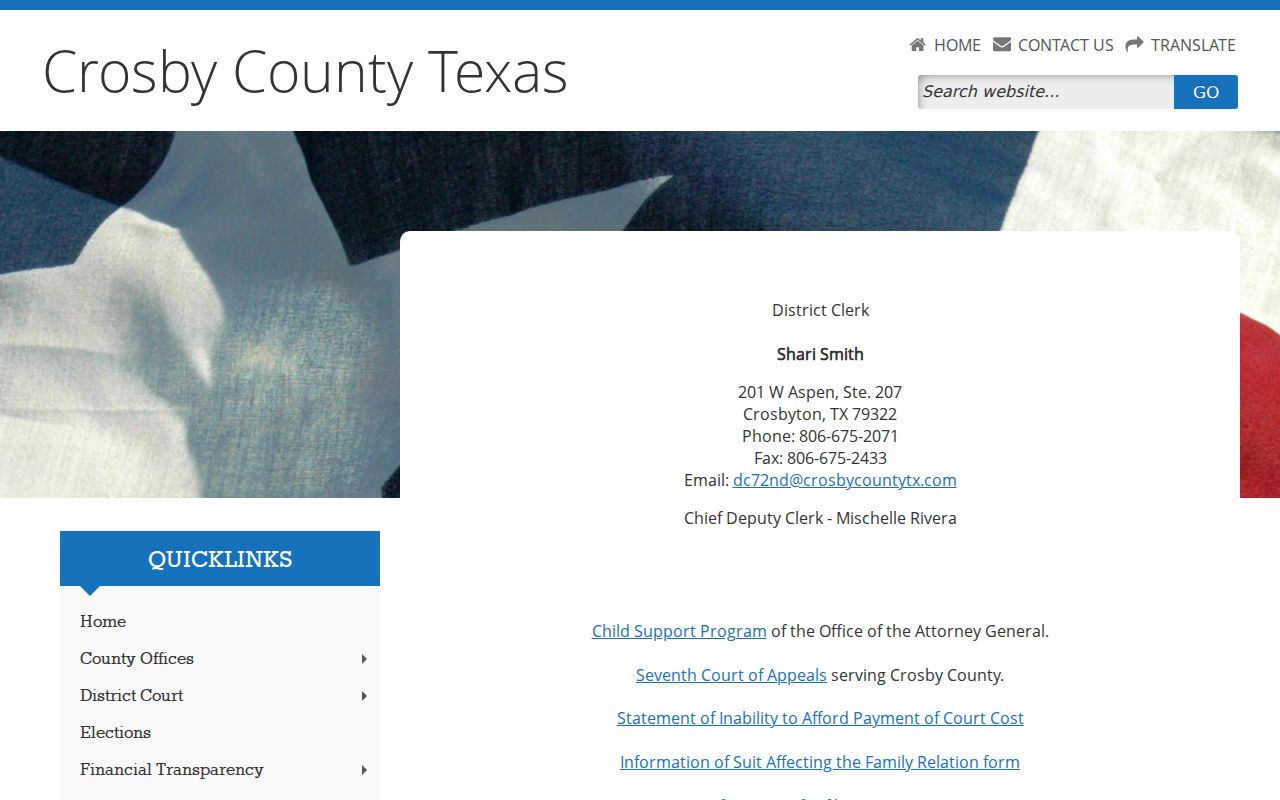
Use the page to find the Crosby County district clerk, then ask about the case record directly.
What a Crosby County Arrest Warrant Contains
A Crosby County warrant document ties the accused, the offense, the issuing magistrate, and the cause number together. The county publishes no warrant-number format, status code, or bond schedule. Any number you see marked here is only a placeholder, not a real local one.
| Warrant number | Local format not published |
|---|---|
| Named person | Identity details used by the court or law-enforcement record. |
| Charge / offense | Offense alleged in the warrant and linked cause number. |
| Issuing judge / court | Magistrate and court with authority over the case. |
| Bond / bail | Case-specific; confirm amount, type, and any other hold. |
| Date issued | Ask for the date and any later service or return entry. |
Crosby County Warrants May Be Sealed
Sealed indictments and unserved warrants stay out of public view until an arrest happens. Once a Crosby County arrest warrant is executed, the warrant and its return may be open, subject to confidentiality rules and court orders. The District Clerk can describe what the district file holds, though some affidavits and identifiers may stay closed. One more wrinkle: juvenile records. Family Code §58.010 makes juvenile arrest warrants, complaints, and supporting affidavits confidential. Search-warrant affidavits follow a different set of rules than arrest-warrant records, so a search order is no self-check list. Ask the court which access law covers the document you want. Chapter 15 spells out arrest-warrant requisites, and the Family Code section carries the juvenile rule.
How Crosby County Arrest Warrants Are Served
Process for service goes to the proper peace officer or agency. The Crosby County Sheriff's Office and jail handle the county side, while the Crosbyton Police Department is a separate city agency. Municipal process can be served by a peace officer or a municipal marshal under state procedure. How Ralls or Lorenzo currently arrange service is not identified, so ask locally. After arrest, the person goes before a magistrate for rights and bond procedures. Crosby County publishes no booking timeline, bond window, accepted payment methods, or identification list. Call 806-675-7301 before you count on a surrender plan.
Crosby County Service Roles Are Split
A judge or magistrate issues the order, a clerk records the case, and a peace officer serves it. County and city agencies keep separate directory entries. That split explains why one call identifies the court while another handles custody logistics in Crosby County.
| Office | Known local role | Contact route |
|---|---|---|
| 72nd District Court / District Clerk | District and felony case route | 806-775-1041 / 806-675-2071 |
| Crosby County Sheriff / Jail | County law-enforcement and jail contact | 806-675-7301 |
| Crosbyton Police Department | City police service contact | 806-675-2301 |
| Ralls / Lorenzo city courts | Municipal process; serving agency not confirmed | 806-253-2558 / 806-634-5596 |
The DPS agency directory lists the Crosby County sheriff and Crosbyton police separately. It does not say who serves every city warrant.
Arrest Warrant vs Summons vs Bench Warrant
A summons directs a person to appear without ordering an arrest. An arrest warrant authorizes an officer to take the person into custody. A bench or FTA warrant follows a missed court duty. See the Crosby County bench-warrant explanation for lower-court and recall details.
| Feature | Arrest Warrant | Summons | Bench Warrant |
|---|---|---|---|
| What it orders | Officer takes the accused into custody | Person appears in court as directed | Arrest process for missed court duty |
| Basis | Probable cause under law | Notice to appear | Failure to appear or comply |
| Who issues | Authorized magistrate | Court or authorized officer | Judge in the pending matter |
| How to respond | Confirm status, counsel, bond, or appearance | Attend by the stated date | Ask issuing court about recall or reset |
Federal Warrants Use a Separate Court
A federal warrant is not a Crosby County court record. Crosby County sits in the Northern District of Texas, which has a documented federal location in Lubbock. Federal process and service run through federal court and the U.S. Marshals Service, not through OmniBase or a county name search. The Northern District of Texas court site is the starting point for federal court access information, and the U.S. Marshals courthouse listing identifies the Lubbock location. PACER can show federal dockets after registration. It is not a general warrant confirmation service. The PACER case-search page lays out account and fee terms. A sealed record or an empty docket result cannot confirm that no federal process exists. For its federal court information, begin with the Northern District of Texas site.
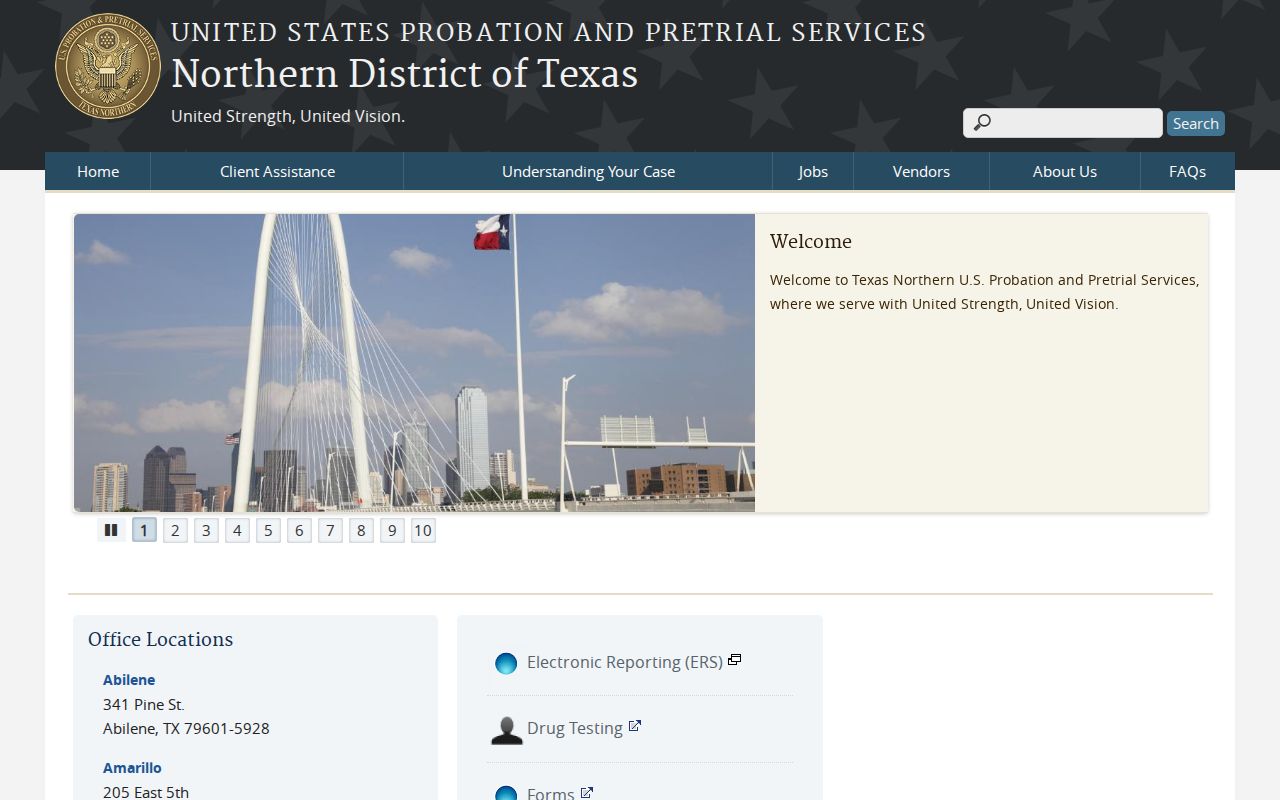
A federal warrant will not surface in a Crosby County warrant search. Register with PACER to search federal dockets.
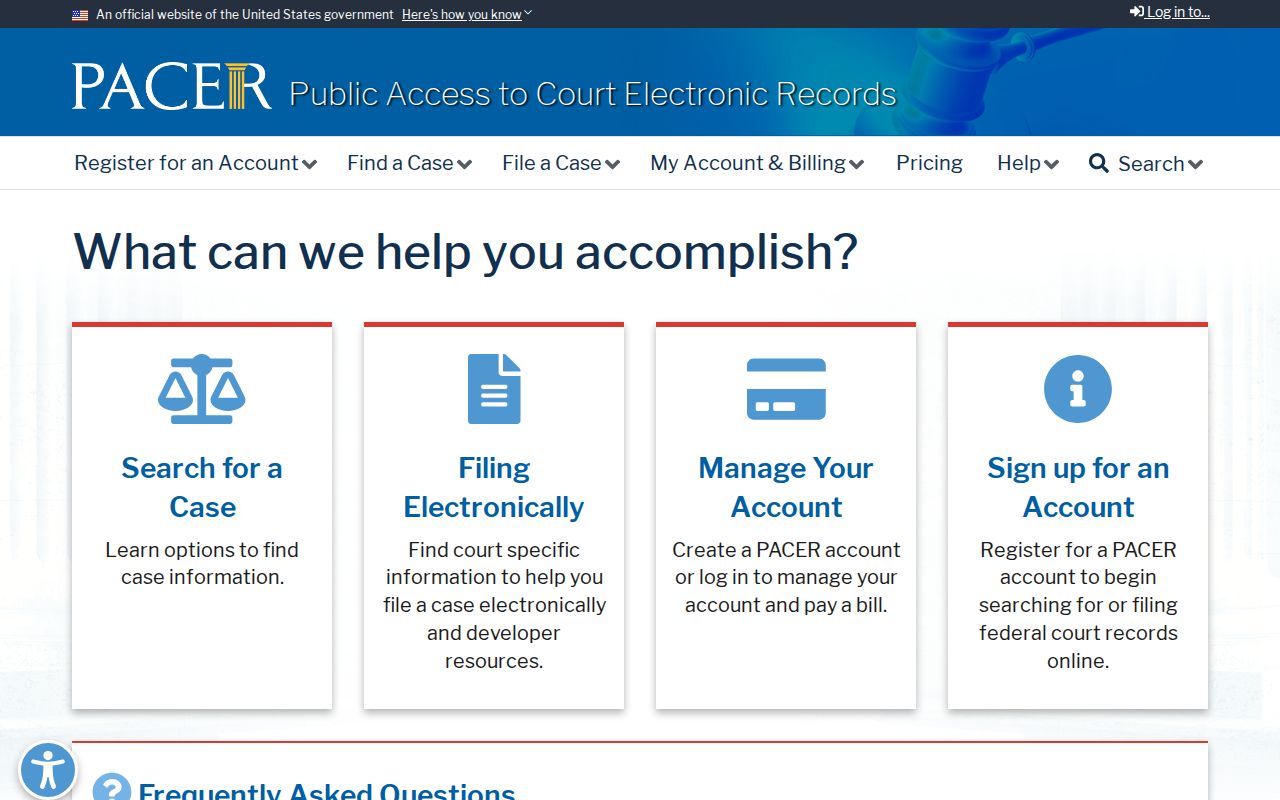
A docket search is not a general guarantee about warrant status.
What to Do If There Is a Warrant for You
Call the issuing court in Crosby County first and get the exact status in writing. A lawyer can advise on voluntary surrender, bond, or a motion to recall or quash the warrant. The sheriff or jail can walk you through booking logistics, nothing more. Write down the next court date and every release condition.
Important: Speak with counsel before appearing; ask the issuing court and sheriff how surrender, another hold, bond, and the next hearing will be handled.
Crosby County Bond Details Are Case Specific
Crosby County publishes no general bond chart, jail bond window, payment list, or surrender handout. Every answer is case specific. The amount and the conditions come from the court, one case at a time. Ask whether any other hold applies. Ask where bond may be posted, and whether a personal bond is on the table. Posting bond gets you released on the court's terms; it does not erase the charge. If the warrant stems from family or child-support process, work through the District Clerk and your counsel on that file, and for county jail logistics call the sheriff at 806-675-7301.